
February 28, 2026
All maritime traffic through the Strait of Hormuz has come to a complete halt following a warning issued by Iran’s Islamic Revolutionary Guard Corps (IRGC), escalating tensions in a region critical to global energy supply.
In a VHF broadcast, the IRGC հայտարարել that “no vessel is permitted to pass under any circumstances,” effectively enforcing a full blockade of the strategic waterway.
The Strait of Hormuz is one of the world’s most vital shipping routes, handling nearly 20% of global crude oil and liquefied natural gas (LNG) flows. There are currently no viable alternative sea routes connecting major Gulf producers — including Saudi Arabia, Iraq, the United Arab Emirates, and Qatar — to international markets.
The EU-led naval mission Aspides confirmed that maritime traffic in the area has been “effectively halted.”

Shipping Industry Responds
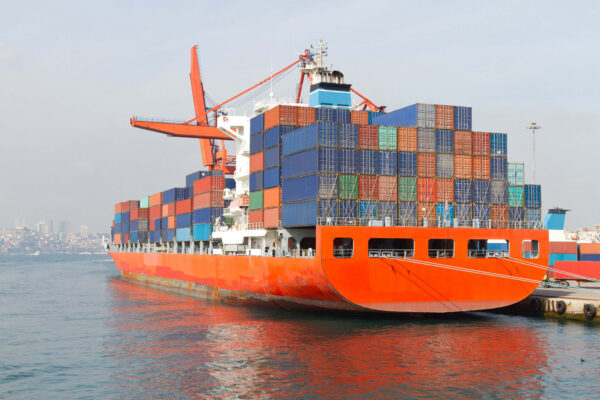
Major global carriers have begun rerouting vessels and suspending operations in the region.
Maersk and CMA CGM announced they are diverting ships via the Cape of Good Hope, avoiding both the Red Sea and the Suez Canal. CMA CGM has also suspended all Suez transits until further notice.
Hapag-Lloyd said it has halted all vessel movements through the Strait of Hormuz, citing escalating risks and an increasingly unpredictable security environment.
Ships currently in the Gulf region have been instructed to move away from high-risk areas or remain anchored in safe zones.
A Region at a Standstill
According to maritime analysts, the disruption has effectively paralyzed the Middle East shipping corridor.
Ports across the Persian Gulf have issued emergency anchorage instructions, while multiple carriers are suspending routes through the Suez Canal. Security risks in the Red Sea remain elevated.
With no immediate alternatives available, the region is now considered a high-risk zone for global shipping.
Global Trade Impact
The disruption is expected to have immediate and far-reaching consequences for international trade and energy markets.
Major transshipment hubs such as Jebel Ali in the UAE are becoming increasingly isolated, as vessels are unable to enter or exit the Gulf.
Shipping routes are being significantly extended, with diversions around the Cape of Good Hope adding an estimated 10 to 14 days to Asia–Europe and Asia–U.S. East Coast voyages.
The longer transit times are likely to drive up fuel costs, disrupt schedules, and create potential shortages of vessels and containers.
Energy Markets on Edge
The blockade threatens a major share of the world’s energy supply. Roughly one-fifth of global oil and LNG exports pass through the Strait of Hormuz.
Analysts expect sharp volatility in energy prices in the coming days as markets react to the disruption.
Company Update
Despite the ongoing disruptions, DUC PHONG MATERIALS confirms that all production activities and order processing continue as normal.
At present, we are still accepting and fulfilling orders globally, with the exception of countries and regions subject to trade restrictions or sanctions.
Customers are encouraged to contact us directly for the most up-to-date information and tailored support. Our team remains ready to provide prompt assistance and ensure the best possible solutions during this period of uncertainty!